Why Are Norwegian Poker Players Trying Online Casinos?
Let's be honest: most Norwegian poker players I know didn't wake up one morning and decide to spin reels. It happened gradually. A home game in Oslo turns into a Thursday night league, the league moves to an app on the phone during the bus ride, and somewhere along the way someone in the group chat posts a screenshot of a roulette win with the caption "just testing the waters." My poker group chat has produced more of these screenshots in the last two years than in the previous decade. So this is a post about that drift, why it's happening, and what's actually going on under the hood.
Poker Is the Gateway Drug (Yes, I Said It)
Poker has always been the respectable entry point into gambling in Norway. It has a story: you read people, you manage your bankroll, you get better with time. Nobody at a kitchen table in Bergen calls poker "gambling" without a little eye-roll, because the whole point is that skill matters. That self-image is powerful, and it's the reason poker players are often the first to try other games. They already believe they're good at this.
Ever notice how poker players talk about casino games? They tend to treat them as a different sport entirely, something to try after a long session when the brain is tired. But the mental shift is small. You're still putting money on an outcome, you're still chasing a feeling, and you're still telling yourself the next hand is different. Poker's structure of sessions, buy-ins, and variance makes the jump to casino formats feel familiar rather than foreign.
The people I've talked to who made the move usually describe it the same way: they got curious about a format, then curious about the cardplayerlifestyle numbers, then curious about whether the same instincts applied. Often they found out that they don't, and that's where things get interesting.
Norsk Tipping and the Strict Regulatory Wall
To understand why Norwegian players look abroad, you have to understand how locked-down the domestic market is. Norsk Tipping holds the state-run monopoly on most gambling products in Norway. Its lotteries, sports betting, and Viking Lotto-style games are everywhere, and it runs a heavily regulated online presence. The model is built around the idea that gambling should be controlled, taxed, and used to fund public purposes, and the regulators take that seriously.
What that means in practice is that foreign online casinos are not licensed to serve Norwegian players, and the rules have teeth. Since the newer gambling legislation came in, payment providers and banks have been obligated to block transactions to unlicensed gambling operators. Norwegian authorities actively work to keep unlicensed sites out of reach, and the Norwegian Gaming Authority publishes lists of sites it considers illegal to market to Norwegians.

Here's where it gets a little absurd. Last month, I was working with a client who wished they had known this beforehand.. The strictness of the system does not make people stop gambling. It mostly changes how they find their games. Players who want something Norsk Tipping doesn't offer, or who want a different kind of table or a different pace, end up searching for workarounds. Some use crypto. Some use offshore sites through VPNs. Some simply don't realize how legally murky it is until their withdrawal is stuck. The tighter the wall, the more creative the detours become.
I'm not writing this to argue that the rules are wrong. I think a controlled domestic market has real advantages, especially around problem gambling support. But if you're a Norwegian player considering an offshore site, you should know that "it's available online" and "it's legal for me to use" are two very different statements.
Crypto Poker Rooms: CoinPoker and the Payment Question
CoinPoker is a good example of why the regulatory picture gets complicated. It's a crypto-based poker room, and it appeals to players who are already comfortable with digital currency and who want to avoid the bank-level blocks that hit card payments. From a purely technical standpoint, it's a clean product: fast deposits, a poker interface that feels modern, and the kind of tournament structure serious players look for.
But the question I always ask is simple. Who is licensed to offer this to me, and what happens if I need help? For Norwegian players, the answer is usually that the site is not licensed under Norwegian law, which means the protections you'd get from a domestic operator largely aren't there. Crypto doesn't change that. It just makes the transactions harder to trace through the normal banking system, which is exactly the thing the regulators are trying to prevent.
If you're going to play on any unlicensed platform, at least go in with your eyes open. Check the terms, understand the withdrawal conditions, and never assume that a crypto wallet makes the risk go away.
Kongebonus and the Bonus Comparison Culture
Another big part of the shift is the bonus culture. Sites like Kongebonus have grown into a major part of the Norwegian conversation around online gambling, comparing offers, explaining terms, and giving players a way to navigate the crowded market. For poker players, bonus offers are often the first thing that pulls them toward a casino, because a welcome match or free spins feels like a free entry ticket.
This is worth a skeptical look. Bonus terms are often where the real game is played. Wagering requirements, game restrictions, maximum cashout limits, and expiry dates can turn a generous-sounding offer into something you basically can't cash out. Poker players, who are used to reading rule sets carefully, sometimes underestimate how much casino bonus terms are designed to be read quickly and forgotten. If a bonus page doesn't clearly show the terms, that tells you something too.
The Mobile Casino Shift
The move from desktop to mobile is probably the biggest practical change. Ten years ago, if you wanted to gamble online, you sat at a computer. Now it's a thumb on a phone during a commute or a lunch break. Mobile casino apps and mobile-optimized sites have made gambling constant, portable, and fast.
For poker players, this is a double-edged sword. Mobile poker apps are great for keeping your game sharp between sessions. But they also make it easy to slide from a focused poker table into a quick spin of a slot during a boring stretch of the day. The interface is designed to keep you in motion, and the switching cost is basically zero.
Why does this even work so well? Because the phone collapses the distance between wanting to play and playing. There's no walk to a venue, no decision about whether to go out tonight. The friction that used to protect people from impulse play is gone, and that's worth keeping in mind every time you open an app.
Live Dealer Games: Where Poker and Casino Meet
If you want to see the bridge between poker and casino worlds, look at live dealer platforms. These are streamed tables with real human dealers, usually running blackjack, baccarat, roulette, and sometimes game-show formats. For a poker player, live dealer games feel more natural than a random number generator because you can watch the dealer, see the table, and feel like there's a human rhythm to it.
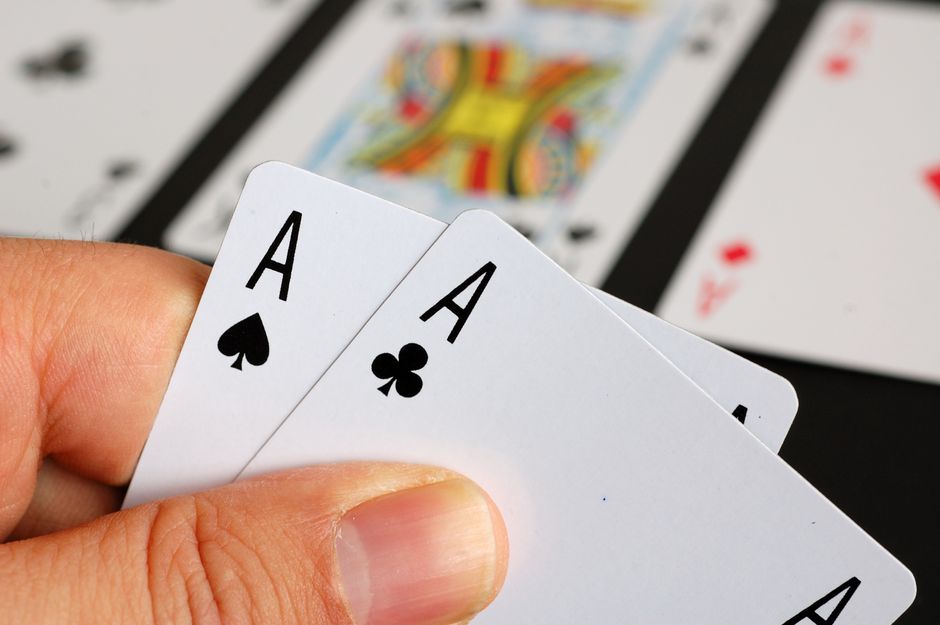
That feeling is part of the appeal, and it's also the thing to watch. A live dealer blackjack table looks social and skill-adjacent, and poker players sometimes assume they can read it the way they read a poker table. They can't. The dealer doesn't have tells in the way an opponent does, and the house edge is baked into the rules and payouts, not into anyone's behavior.
Here's a useful comparison. In poker, the rake is taken from the pot, and the game is between players. In a casino game, you're playing against the house, and the odds are fixed by the rules. European roulette has a house edge around 2.7 percent on a single zero wheel, and that number doesn't care how many times you've been right about your reads at the poker table. Poker players are used to thinking about expected value, so this is actually the most transferable insight: the math is different, and the math is not on your side.
The Big Mistake: Treating Slots Like a Skill Game
Now for the part that actually annoys me. I keep hearing poker players describe slot machines as "strategic," as if choosing a game with a higher volatility or hitting the right bet size changes the outcome. It doesn't. Slots are random number generator games. Every spin is independent of the last one. There's no pattern to read, no opponent to outplay, and no hand you can fold.
This is the most common mistake I see from players coming over from poker, and it's understandable. Poker trained them to look for edges, and they bring that instinct to a game that has none. Calling a slot "strategic" is a bit like bringing a chess clock to a coin toss. You can pick your bet size and your session length, and those are real decisions. But the outcome of each spin is not something you can influence.
If you find yourself building theories about when a slot is "due" or which machine is "hot," that's a signal to step back. Poker taught you that patterns matter. In slots, the pattern you're seeing is usually just your brain doing what brains do.
What I'd Tell a Friend at the Table
If you're a Norwegian poker player curious about online casinos, here's my honest take. Be curious, but be clear-eyed. Know which products are licensed for Norwegian players and which aren't. Read the bonus terms before you claim anything. Treat mobile access as a convenience you need to manage, not a reason to play more. And drop the idea that slots reward skill, because they don't.
Poker taught a lot of us to think in probabilities and to respect variance. Those are useful habits, and they're the best defense you have when a casino app is trying to make the next spin feel like it's yours to control. Use them. The house is counting on you to forget them.
Next time someone in the group chat posts a screenshot of a big win, ask them what their expected value was before they hit spin. The silence that follows is usually the most honest thing said all week.